
Koyo Kouoh's Vision Realized
VENICE, Italy — This May marks the one year anniversary of the untimely passing of curator Koyo Kouoh, whose intrepid vision led to the curatorial presentation In Minor Keys at the 61st International Art Exhibition of La Biennale di Venezia.
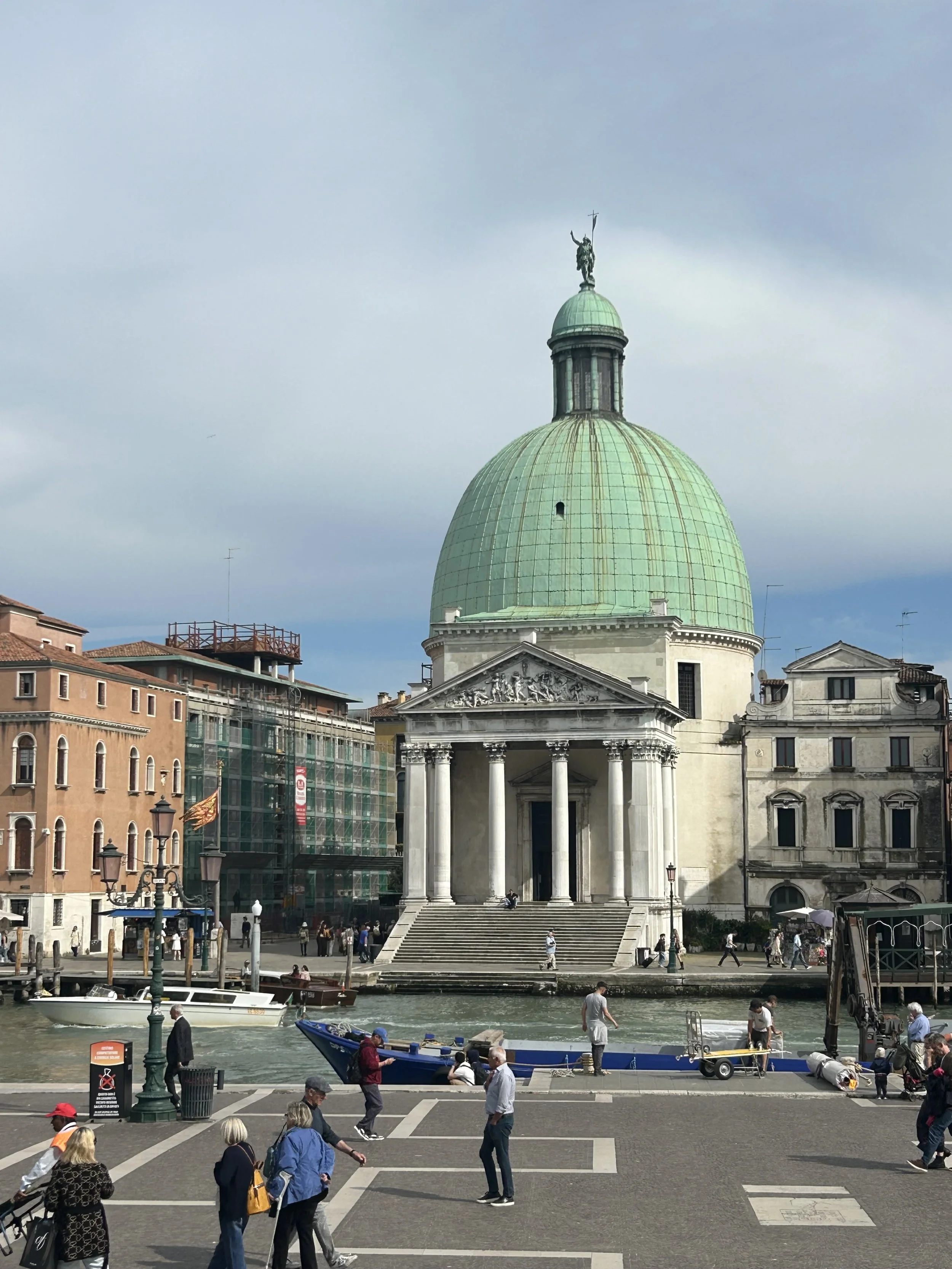
San Simeone Piccolo
On exiting the bustling station at Venezia Santa Lucia, it is impossible not to be utterly and completely enamored with what has made Venice Venice for centuries. The soft pale green copper-plated dome and corinthian column portico of the San Simeone Piccolo greet you with a calming sensation despite the hoards of visitors clamoring down the stairs towards the Grand Canal.
As the first African woman to curate in its 131-year history and a champion for artists of the Global South, Kouoh’s path was in and of itself unprecedented. Her passing created an even more evocative backdrop to witness her vision realized in the hands of her team with her family’s full consent. The theme In Minor Keys has generated a myriad of interpretations from trade and non-trade media alike. In the official catalog, in Kouoh’s own words, “the minor keys come alive in the quiet tones, the lower frequencies, the hums, the consolations of poetry, all portals of improvisation to the elsewhere and the otherwise. The minor keys ask for listening that calls on the emotions and sustains them in return.” Her words serve as a right-on-time salve assuredly beyond even her own comprehension. With “the anxious cacophony of the present chaos raging through the world,” Koyo’s words embody a quiet defiance in choosing a posture of healing and meditative reflection during a time of discord and tragedy.
“[Take a deep breath] / [Exhale] / [Drop your shoulders] / [Close your eyes]”
Witnessing the pre-opening days of the Venice Biennale meant being in the midst of advisors, collectors, and often the artists themselves experiencing a reprieve after lengthy installation processes and even lengthier navigations to arrive at this juncture of showcasing their work on a global stage. An afternoon sighting of Sanford Biggers touring a villa or Charles Gaines walking alongside the canal reminds you of how incredibly small the Biennale Arte can make this far-reaching yet insider-y world. Regardless of intention, every visitor had clear instructions for this historic unveiling in keeping the mantra of Kouoh’s for the exhibition alive — “Take a deep breath / Exhale / Drop your shoulders / Close your eyes.”
The geopolitical maelstrom has no doubt reached a fever pitch, which pulled the Biennale into its grasp and played out in various ways across ‘the olympics of the art world.’ In late April reports, the Official Jury decamped and as of this week, nationalistic outrage continues regarding presenting pavilions. On site in the Giardini, each nation’s pavilion stood in its typical austerity, but the traffic patterns that fill these spaces during the preview dates upset expectations. Where short lines and in some instances, zero visitors flocked to certain pavilions, other pavilions (i.e. Austria) had piazza-wrapping lines to behold a live performance piece. In acknowledging the hubbub, all things that could not have been predicted by Kouoh or her team, the unexpected gravitational pulls provided a third dimension from which to re-contextualize the artist’s role as “vital interpreters of the social and psychic condition and catalysts of new relations and possibilities.”
Not even a few days of torrential downpour could block the emotional resonance of the undertaking and the difficulty in pulling together a visual proposition this layered, especially without the physical presence of its fearless leader. Linda Goode Bryant and Alvaro Barrington claimed one of the main outdoor stages with captivating standalone installations while inside at the Giardini, a new commission Anatomy of the Magnolia Tree for Koyo Kouoh and Toni Morrison (2026) manifestly encapsulated the heart-stirring timbre of the occasion.
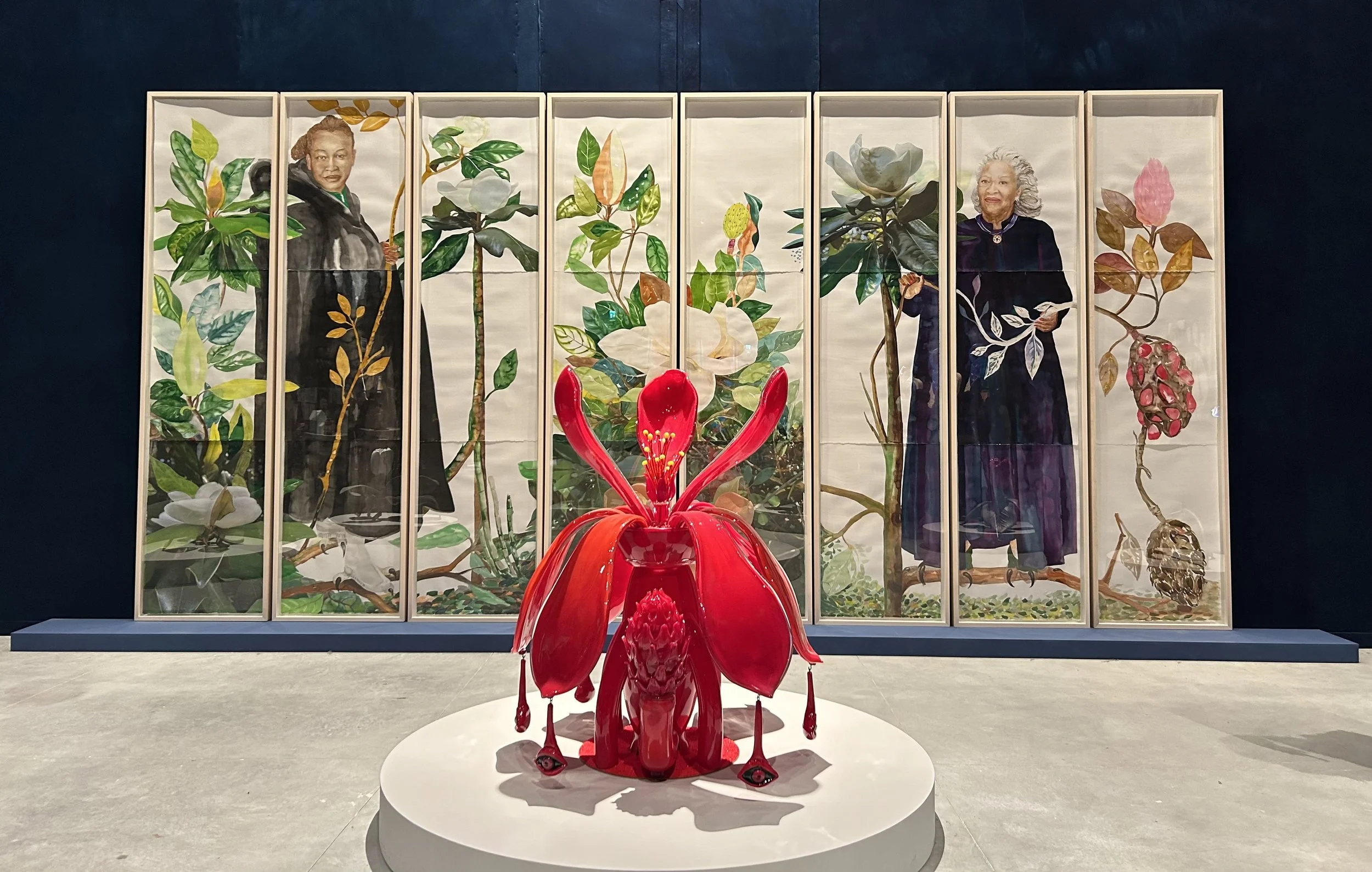
Anatomy of the Magnolia Tree for Koyo Kouoh and Toni Morrison (2026)
Created by Maria Magdalena Campos-Pons, this “monument in floral form” comprised of eight painted panels featured “Morrison, the first Black woman to win the Nobel Prize in literature, and Kouoh, the first African woman to curate the Biennale Arte” and seven glass-resin sculptural magnolias, the undisputed flower of the American South. (Campos-Pons is based in Nashville, Tennessee.) In person, it was all quite moving, standing in the midst of these framed panels with two towering figures who have shaped the written and visual interiority of countless human beings. The world is surely a better place for their collective presence and yet, their absence has never been more deeply felt.
The 61st International Art Exhibition of La Biennale di Venezia is open now through November 2026. All images courtesy of PROTOChic.